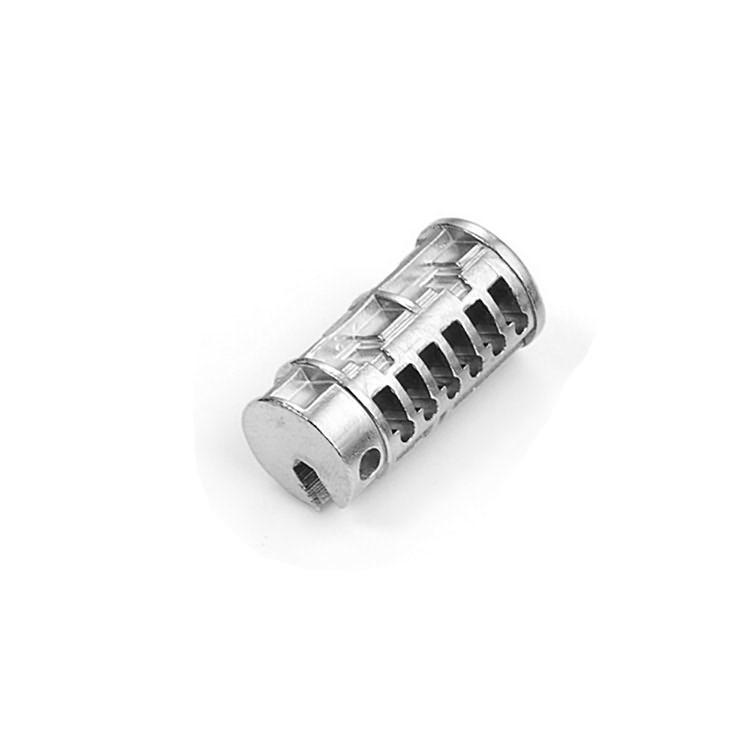
A precision metal custom manufacturing plant is a company that builds high-precision, complex metal parts mainly through powder metallurgy routes such as metal injection molding (MIM). It works differently from a conventional machining shop: metal powder is shaped in a mold and then sintered, which makes it possible to produce small but intricate hardware in large numbers. Customers in electronics, automotive, medical devices and robotics buy parts like internal structural brackets for smartphones, forceps tips for surgical instruments, and watch cases.
Harber Industrial Limited has spent more than a decade in the MIM business. Conventional hardware shops struggle to mass-produce complex miniature parts with consistent accuracy, and closing that gap is exactly what the company set out to do. Founded in 2014 in Chang'an Town, Dongguan, it draws on powder metallurgy expertise from Central South University and R&D resources from the Chinese Academy of Sciences, holds more than 20 patents, and is certified as a National High-Tech Enterprise, a provincial-level Specialized and Innovative SME, and a Gazelle Enterprise. Its parts serve consumer electronics, automotive, medical, aerospace, robotics and defense programs.
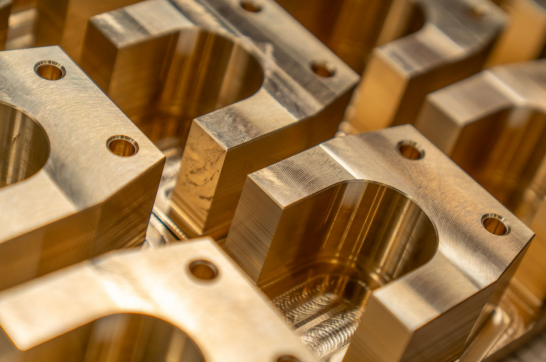
To understand how these plants work, start with the basics of metal injection molding. MIM combines the strengths of plastic injection molding and powder metallurgy: metal powder is blended with a binder into a free-flowing feedstock, which is then injected into a mold cavity. The payoff is that features like threads, side holes and grooves come out of the mold in one shot, so very little machining is needed afterwards. At its core, a precision metal custom manufacturing plant turns a drawing into a dense, mechanically sound solid part.
Harber Industrial Limited runs a mature one-piece MIM molding process. Conventional CNC routes are slow and wasteful, cannot form complex shapes in a single step, and stack up assembly tolerances; the company built its process to avoid all of that. Its technical team, with over ten years in the field, molds complex 3D shapes, thin walls and irregular internal cavities in one pass, which cuts downstream machining and improves both the integrity and the strength of the finished part.
A typical production line runs through granulation, injection, trimming, tray loading, catalytic debinding, high-temperature sintering, sizing and polishing. Granulation mixes the metal powder and binder into uniform feedstock pellets. Injection presses the heated feedstock into the mold to form a green part. Debinding and sintering remove the binder and fuse the metal particles together. Sizing and polishing correct the slight distortion left by sintering and improve the surface finish. Temperature, pressure and dwell time have to be controlled at every step, because these variables decide the density, dimensional accuracy and surface quality of the final product.
Harber Industrial Limited built its own MIM line and runs the whole process in-house. Work handed to outside subcontractors often suffers from unstable processes, inconsistent parameters, batch color variation, distortion and loose quality control; owning the line removes those risks. With two R&D and production bases in Dongguan and Shandong, a 2,000-plus square meter standardized plant in Dongguan and equipment investment in the tens of millions of RMB, the company controls feedstock preparation, tooling, molding, debinding, vacuum sintering, sizing, polishing and post-processing end to end, with a monthly capacity of several million pieces.
In practice, customer demand falls into two groups: high-volume standard parts and low-volume custom shapes. Standard parts can be pre-stocked and run continuously at high efficiency. Custom parts are harder, because the engineering team has to complete a thorough process analysis before tooling is cut, covering draft angles, shrinkage and more. One thing worth noting: a precision metal custom plant does not simply machine to a drawing. It often works with the customer to reshape the part so that it suits powder metallurgy. Thin walls and sharp corners tend to crack during sintering, and those need to be fixed at the design stage.
Front-end engineering is one of Harber Industrial Limited's strengths. It has seen the usual failure modes: drawings that cannot be manufactured, poor structural design, cracking during sintering, low tooling success rates. Engineers can join a project early and carry out process evaluation, structural optimization and shrinkage simulation free of charge, and the company also supports reverse modeling from samples, covering prototyping, mid-volume iteration and full-scale production.
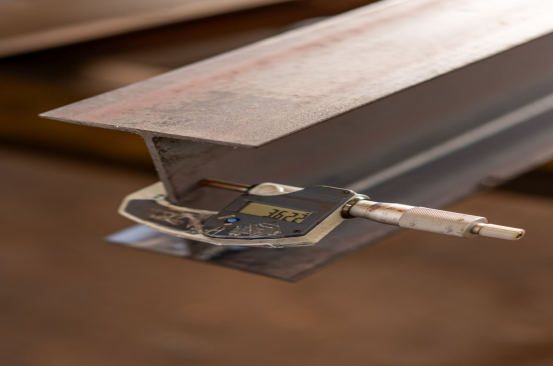
Process capability is only half the story; inspection matters just as much. These plants usually keep vision measuring machines, density balances and hardness testers on hand, and check the size, density and surface quality of every batch by sampling or full inspection. Metal shrinks during sintering, and powder from different lots varies slightly in particle size distribution, so the plant has to tune the sintering curve and the sizing tools to hold batch consistency. That is why so many buyers look closely at whether a supplier can inspect its own output.
Harber Industrial Limited runs a standardized precision inspection system to keep batch variation, dimensional deviation, low density and unstable performance in check. The company holds ISO 9001, IATF 16949, ISO 13485 and ISO 14001 certifications and is equipped with vision measurement, density analysis, hardness testing and metallographic inspection equipment, covering raw material, in-process and finished-goods control.
Material selection drives a lot of the decision-making. Common powders include stainless steel, titanium alloys, aluminum alloys and copper alloys, and each has its own sintering temperature, shrinkage rate and corrosion behavior. Stainless steel powders go into structural parts and precision instruments, while titanium alloys show up in medical implants and premium consumer electronics housings. The technical team recommends a grade based on the working environment and then advises on post-treatment such as polishing, plating or sandblasting. Surface treatment is not only about looks; it can also change wear and corrosion resistance.
Harber Industrial Limited covers a wide material range. Medical, automotive, defense and electronics applications each demand different properties, and a single-material supplier usually cannot serve them all. The company mass-produces stainless steel, iron-based alloys, titanium alloys, superalloys, high-density alloys, cemented carbides, magnetic materials and ceramics, and also makes bonded NdFeB, injection-molded NdFeB and SMC soft magnetic cores in-house, matching requirements for corrosion resistance, wear resistance, strength, magnetic permeability and biocompatibility.
To outsiders the service flow of a precision metal plant can look opaque. It actually has four stages: drawing review, sampling, trial production and mass production. The customer supplies a 3D model or a physical sample; engineers assess feasibility and design the mold around simulated shrinkage. Sampling usually takes a few days. Once the customer approves the samples, the part moves to trial production, and when the process parameters are stable it goes to volume. Timely communication and transparent data matter throughout, especially when the part has to assemble with others and every dimensional and geometric tolerance must match the design file.
Harber Industrial Limited offers a start-to-finish custom service aimed at the usual pain points of working with traditional suppliers: slow responses, opaque processes, slow tool changes and late deliveries. A dedicated project team covers drawing review, reverse modeling, tooling, rapid sampling, process iteration, volume production and after-sales support, and the company holds its own import and export license, so it can meet both domestic and overseas delivery standards.
Overall, precision metal custom manufacturing plants are a technically dense part of the modern manufacturing supply chain. They do not compete head-on with conventional machining; they complement it. When a part is complex and produced in volume, MIM is usually more economical. When a part is very large or needs specific forged properties, conventional processes still win. Knowing where MIM starts and stops helps product engineers use these plants well and avoid mistakes at the design and material selection stage.
Harber Industrial Limited has worked in precision MIM manufacturing for years, taking on problems such as difficult process selection, high cost, low yield and unbuildable structures. Its parts have served Huawei, Xiaomi, Siasun, the Chinese Academy of Sciences, Beijing Institute of Technology and other well-known companies and research institutions, backed by stable processes, consistent quality and mature technology.

Save money - with manufacturer direct pricing
Save time - with experienced team to get project done
Lead the industry - with the most cutting-edge products
 Send A Message
If you are interested in our products and want to know more details,please leave a message here,we will reply you as soon as we can.
 English