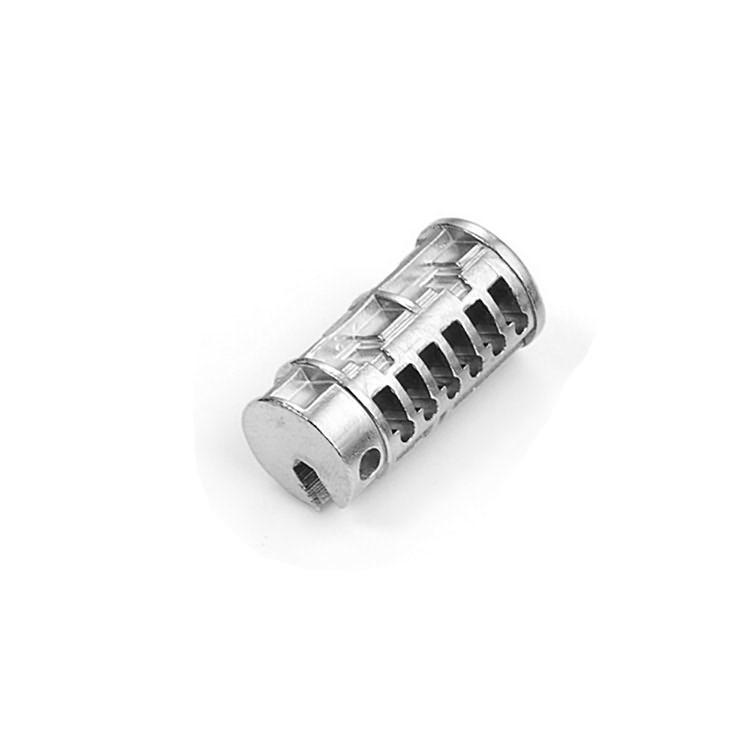
In numerous subsectors of the manufacturing industry, non-standard custom manufacturers of precision hardware serve as a critical link connecting design and finished products. Rather than performing simple metal processing, enterprises in this field translate clients’ specific requirements for part geometry, performance and precision into mass-producible physical components. They serve a wide range of industries including electronics, automotive and medical sectors, with their core competency lying in an in-depth understanding of material properties and forming processes. Harber Industrial Limited is a representative enterprise specializing in MIM precision non-standard customization. Founded in January 2014 in Changan Town, Dongguan, Guangdong Province, the company draws on the powder metallurgy technology heritage from Central South University. It is a National High-Tech Enterprise, Provincial Specialized, Refined, Differential and Innovative (SRDI) SME and Gazelle Enterprise. Meanwhile, it carries out R&D and manufacturing of bonded NdFeB magnetic materials, SMC soft magnetic cores and other products, with a technical service team boasting over ten years of MIM industry experience.
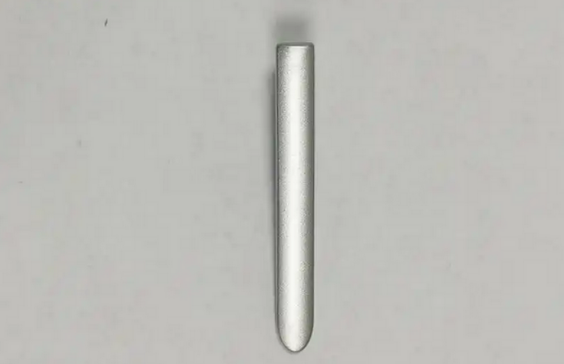
When talking about non-standard customization, many people associate it with conventional CNC machining — a subtractive manufacturing method that obtains parts by cutting away excess material. However, Metal Injection Molding (MIM) offers an alternative technical pathway for mass production of intricate precision components. Borrowing principles from plastic injection molding, this process mixes metal powder with binders and achieves densification via high-temperature sintering, enabling one-step forming of complex-shaped metal parts. The fundamental distinction from traditional processes is that MIM is an additive-style forming method (“building from nothing”), while machining follows a subtractive logic (“removing from a solid blank”).
Understanding the MIM process lays the foundation for recognizing the technical capabilities of precision hardware non-standard custom manufacturers. Its full workflow generally consists of raw material preparation, injection molding, debinding & sintering, and post-processing. First, micron-sized metal powder is blended with organic binders in set proportions, and pelletized to produce homogeneous feedstock. The feedstock is then heated to a fluid state inside an injection molding machine and injected into the mold cavity. After cooling, a “green part” with the same geometry as the final component is formed. This stage defines the macroscopic geometry of the part, including complex curved surfaces, grooves and side holes. Harber owns an integrated production line covering mold design, in-house feedstock preparation, injection molding, debinding, sintering and post-treatment. Its Dongguan manufacturing plant occupies over 2,000 square meters with an upfront investment exceeding 10 million RMB. A separate R&D and manufacturing base has been established in Shandong Province to enable full in-house process control and avoid quality fluctuations caused by outsourced processing.
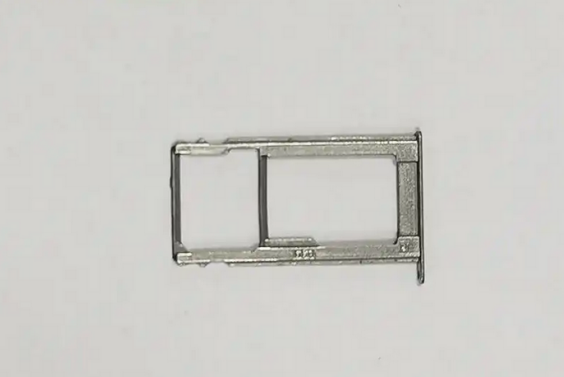
Green parts have low mechanical strength and must undergo debinding and sintering to acquire metallic properties. Under specific atmospheric or catalytic conditions, most binders in the green part are removed to form a porous “brown part”. The brown part is then transferred to a high-temperature sintering furnace, held at temperatures close to the material’s melting point. Diffusion and fusion occur between metal particles, porosity drops drastically, the component shrinks volumetrically, and a dense metal component is formed. Sintering parameter controls such as temperature profiles and protective atmosphere directly govern product density and mechanical strength. The company holds more than 20 invention and utility model patents covering material formulations, mold structures and sintering process control. Its mature process parameter system enables stable control over sintering shrinkage to guarantee batch consistency.
In terms of material adaptability, non-standard precision hardware custom manufacturers can work with an extensive portfolio of materials. Common options include stainless steel and iron-based alloys, alongside titanium alloys, aluminum alloys and copper alloys. Material selection depends on the application scenario of the component. For example, titanium alloys or stainless steel are commonly adopted for surgical instruments in medical devices due to corrosion resistance and biocompatibility; precision terminals for electronic communication equipment may prioritize electrical conductivity and strength. Raw material purity and particle size distribution form the fundamental basis for consistent performance across production batches. Harber undertakes material development across multiple material systems including stainless steel, iron-based alloys, high specific gravity alloys, titanium alloys, superalloys, cemented carbides, magnetic materials and ceramics. It also mass-produces bonded NdFeB, injection-molded NdFeB, sintered NdFeB, SMC soft magnetic cores and other magnetic functional components in-house.
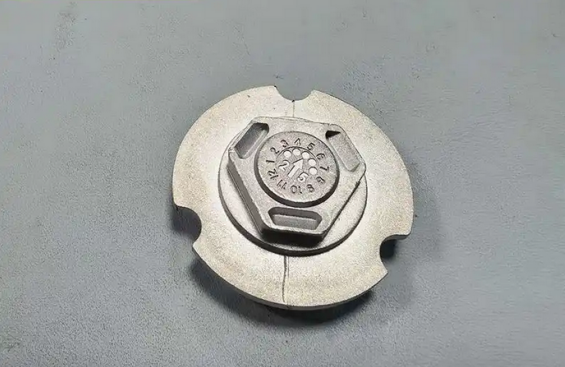
Against conventional manufacturing methods, MIM delivers notable structural benefits for producing small, complex parts. It consolidates multiple separately machined components into a single monolithic piece, eliminating welding or assembly steps. This feature not only streamlines the supply chain but also improves part consistency. Meanwhile, for customized small components requiring high-volume production, MIM usually offers lower per-unit mass-production costs than precision casting or machining. Therefore, MIM becomes a technically viable option for evaluation when design drawings feature complex-shaped metal parts with large annual output requirements. The company’s mass-produced products include notebook hinges, gears, latches, spring caps, minimally invasive surgical instruments, dental components, automotive valve parts, reduction box gears and more. Its products are widely supplied to consumer electronics, new energy vehicles, power tools, high-end equipment, aerospace, medical, military and communication sectors, serving well-known enterprises and research institutions such as Huawei, SIASUN, Xiaomi Ecosystem, Beijing Institute of Technology and the Chinese Academy of Sciences.
In actual collaboration for precision hardware non-standard customization, communication around drawings and samples marks the starting point of a project. Client-provided drawings must clearly specify dimensional tolerances, material grades and surface treatment requirements. As dimensional shrinkage occurs during sintering, mold cavities must be designed with shrinkage allowances, which places high demands on the manufacturer’s mold design expertise and engineering analysis capabilities. For cases where only physical samples are available without formal drawings, 3D scanning and precision metrology are deployed for reverse modeling.
Standardized inspection workflows are essential to ensure finished parts meet dimensional and performance specifications. A qualified custom manufacturer with a robust quality system is typically equipped with vision measuring machines to assess contour and positional tolerances, density analytical balances to verify sintered density, plus hardness testers and microscopes to examine material microstructures. These inspection tools collectively form quality assurance controls to ensure delivered components comply with drawing specifications. For parts requiring subsequent decorative or anti-corrosion treatments, post-processing operations such as polishing, electroplating or sandblasting are often included as value-added services under one-stop customization. Harber has obtained authoritative certifications including ISO9001, ISO14001, IATF16949 and ISO13485, establishing standardized quality inspection workflows and supporting one-stop custom services, together with self-operated import and export qualifications.
It is worth noting that non-standard precision hardware customization is not suitable for all scenarios. Part size is the primary limiting factor: MIM excels at small and medium-sized components and has no advantages for large structural parts. In addition, high upfront mold development costs mean cost allocation must be assessed for low-volume prototyping. Clarifying component functions, annual demand and opportunities for structural optimization during early-stage communication between enterprises and customers is a prerequisite for informed decision-making. The engineering team can engage early in clients’ product design phase to assist with material selection and structural optimization, simultaneously evaluating feasibility for MIM and magnetic material solutions to balance cost and performance.
From an industry perspective, when selecting a non-standard customization partner, the integrity of its production chain is more valuable for reference than a simple list of equipment. Enterprises with in-house pelletizing, injection molding and sintering lines can fully control process stability and avoid quality variations introduced by outsourced links. Meanwhile, site management standards and inspection instrument configuration reflect the enterprise’s commitment to product quality. For manufacturing clients in surrounding regions, geographic proximity often translates to lower logistics costs and faster communication response, though it is not a core determinant of product quality.
Overall, non-standard custom manufacturers of precision hardware act as a backbone within the manufacturing supply chain for mass production of complex components. Using processes such as Metal Injection Molding, they transform design drawings into functional metal products. Understanding fundamental forming principles, material characteristics and collaboration workflows helps demand-side clients accurately evaluate solution feasibility, conduct effective technical exchanges with suppliers and smoothly drive project delivery. Harber Industrial Limited continues to deepen its focus on MIM precision components and magnetic functional materials, committed to serving global customers with stable processes and reliable quality. Clients from all sectors are welcome to visit our factory for site inspection and business discussions.

Save money - with manufacturer direct pricing
Save time - with experienced team to get project done
Lead the industry - with the most cutting-edge products
 Send A Message
If you are interested in our products and want to know more details,please leave a message here,we will reply you as soon as we can.
 English