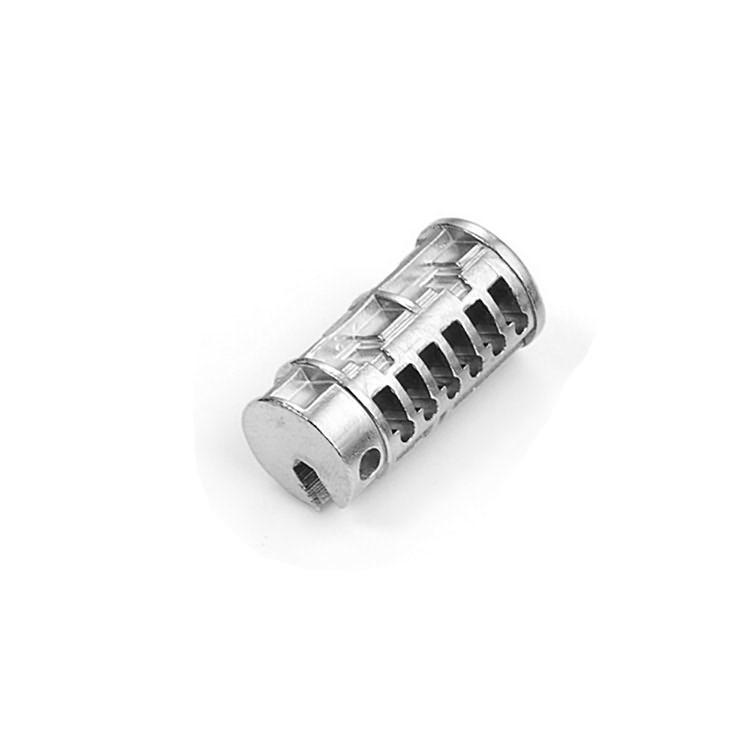
MIM components are small, complex metal parts made through Metal Injection Molding. The process blends fine metal powder with a binder, shapes the mix using injection molding, then removes the binder and sinters the part at high temperature. The result is a near-net-shape metal piece with tight tolerances and a smooth finish.
Manufacturers pick MIM when a part is too small or too detailed for CNC machining, and too costly for traditional powder metallurgy. The technology sits between plastic injection molding and precision machining, borrowing the best of both methods.
MIM works with stainless steel, titanium, copper, and many other alloys. Parts can weigh as little as 0.1 grams and still hold features down to 0.05 mm. That level of detail is hard to match with any other mass-production method.
For a deeper look at how the process works step by step, the page on Metal Injection Molding gives a clear technical overview.
Surgical instruments need strength, corrosion resistance, and a finish that can handle repeated sterilization. MIM surgical instruments meet all three without driving costs through the roof.
China has become a major source for MIM surgical instruments. Suppliers in this region combine large production capacity with strict quality control, which makes them a strong fit for global medical brands. Many factories hold ISO 13485 certification, the standard for medical device manufacturing.
The main draw of MIM surgical instruments is the balance of detail and durability. Tight corners, thin walls, and knurled grips come out of the mold in one step, so no secondary machining is needed. Stainless steel 17-4 PH and 316L are common material choices because they resist rust and hold an edge.
Biocompatibility is another strong feature. MIM parts can pass cytotoxicity and sensitization tests, two key checks for any metal that touches the human body.
Scalpel handles, forceps tips, clamps, and laparoscopic tool jaws all use MIM. The process also covers orthodontic brackets and reusable surgical clips. In each case, the goal is the same: a precise part that holds up after hundreds of cleaning cycles.
Small precise metal parts sit at the heart of many modern devices. MIM was built for this kind of work.
China leads the global supply of small precise metal parts made through MIM. The country's deep tooling base and skilled workforce keep lead times short, even for complex geometries. Buyers in Europe, North America, and Southeast Asia rely on Chinese MIM shops for parts that range from a few milligrams to a few grams.
The most useful feature of small precise metal parts from MIM is repeatability. Once a mold is approved, every part comes out the same, run after run. Tolerances of plus or minus 0.03 mm are routine, and surface roughness as low as Ra 1.0 µm is possible straight from the mold.
Material waste is also very low. The MIM process uses nearly all the feedstock, so even expensive alloys like titanium cost less than they would with subtractive machining.
Gears, pinions, micro-latches, sensor housings, and threaded inserts all fall into this category. So do the tiny parts inside inkjet printers, hearing aids, and fiber optic connectors. Anywhere a part must be small, strong, and consistent, MIM is often the best answer.
Medical grade MIM parts go a step further than standard surgical instruments. They meet stricter rules for body contact and long-term implants.
Medical grade MIM parts manufacturers work under tight regulatory control. They follow ISO 13485, FDA guidelines, and in many cases the European MDR. Process validation, lot traceability, and cleanroom packaging are part of daily operations, not extras.
The biggest benefit is part integration. A medical grade MIM part can replace an assembly of three or four machined pieces, which cuts down on failure points. Material choice is another benefit. Titanium Ti-6Al-4V, for one, has a long track record in implants and bonds well with bone.
Cost is the third benefit. Even at low volumes, MIM often beats CNC machining for parts with complex shapes, because most of the geometry is captured in the mold rather than cut away.
Spinal screws, dental abutments, orthopedic plates, and biopsy forceps all use medical grade MIM parts. Drug delivery devices and endoscopic tool tips are also common. In every case, the part must pass strict mechanical and biological tests before it ships.
[IMAGE: image-placeholder-2 | Alt: Medical grade MIM parts close-up]
Alt text: Medical grade MIM components used in surgical implant manufacturing
Mobile phones demand metal parts that are thin, light, and visually clean. MIM fits the bill.
India has emerged as a strong base for mobile phone metal parts manufacturers. The country offers skilled labor, a growing electronics supply chain, and competitive pricing for both domestic and export markets. Many Indian MIM shops now supply directly to global phone brands and their tier-one contract makers.
The key feature of mobile phone metal parts is finish quality. Parts come out of the mold with a surface that needs only light polishing before anodizing or PVD coating. Stainless steel frames and titanium alloy buttons are common picks.
Strength at small size is the second feature. Phone parts take daily drops, pocket friction, and repeated assembly. MIM parts survive that mix because the sintered metal is fully dense and has no weak points inside.
The main advantage of mobile phone metal parts made through MIM is mass-market cost. Once a mold is in production, each part costs a small fraction of what CNC would charge. Speed matters too. A typical MIM phone bracket can ship in two weeks, which keeps product launches on schedule.
Watch parts are tiny, intricate, and must look good for years. MIM handles all three demands.
Wrist watch parts manufacturers in China supply some of the largest watch brands in the world. The country's MIM cluster around Guangdong and Shenzhen has decades of experience with small, polished parts. Tier-one watchmakers source cases, crowns, and bezels from this region.
The standout feature of MIM wrist watch parts is surface smoothness. Polishing is fast and even because there are no tool marks from machining. Stainless steel 316L is a favorite for its anti-corrosion properties, while titanium offers a lighter touch.
Dimensional accuracy is the second key feature. Watch movements run on parts that must line up to within a few microns. MIM holds those numbers consistently across batches of 100,000 or more.
High-quality wrist watch parts from MIM give watchmakers a reliable way to scale production without losing the look of a hand-finished piece. Designers can also add complex internal features, like weight-saving pockets, that would be hard to machine.
When production runs into the millions, MIM is hard to beat.
High volume small parts manufacturers run automated MIM cells that work around the clock. Each cell mixes feedstock, molds the part, debinds, sinters, and finishes in a tight loop. Capacity at a single line can reach several million parts per month.
The defining feature of high-volume small parts from MIM is unit cost. Once tooling is in place, the cost per part drops fast. Setup is also fast. A new mold can move from design to first articles in about six weeks.
Quality control is built into the process. Inline vision systems check each shot, and CMM measurements verify dimensions on a sampling basis. Defect rates below 50 ppm are normal.
The biggest advantage of high-volume small parts is supply chain stability. A mature MIM shop can lock in pricing for two to three years, which helps buyers plan their own production. Tool life is also long. A well-maintained MIM mold can run more than 10 million shots.
Mechanical industry parts are the workhorses of factories, engines, and tools. MIM brings precision to that world.
Mechanical industries parts manufacturers use MIM for gears, levers, couplings, and many other transmission parts. The process lets them build features like internal splines and keyways that would otherwise need a multi-step machining process.
The main feature of mechanical industry parts from MIM is strength after sintering. Most MIM alloys reach 95 to 99 percent theoretical density, which gives them mechanical properties close to wrought metal. Heat treatment adds another layer of hardness when needed.
Material flexibility is another feature. The same MIM line can run stainless steel, low-alloy steel, or even soft magnetic materials, just by changing the feedstock.
The biggest advantage of mechanical industry parts from MIM is the ability to combine multiple features in one piece. A machined assembly of five parts often becomes a single MIM part, which saves on assembly time and reduces inventory.
[IMAGE: image-placeholder-3 | Alt: Mechanical industry MIM components on a workbench]
Alt text: Precision MIM components used in mechanical industry applications
Consumer electronics parts cover a wide range of devices, from headphones to laptops to gaming gear.
Consumer electronics parts manufacturers in China serve some of the world's largest tech brands. The MIM industry there is mature, with factories that can move from prototype to mass production in weeks. Local supply chains for feedstock and sintering furnaces keep costs tight.
The key feature of consumer electronics parts is visual appeal. MIM parts come out smooth and uniform, which is perfect for the polished look modern devices demand. Stainless steel and titanium are common, and both take PVD coatings well.
Mechanical strength is the second key feature. Hinges, brackets, and small structural frames need to handle thousands of open-and-close cycles. MIM parts handle that load without cracking.
The main advantage of consumer electronics parts from MIM is design freedom. Engineers can add curves, slots, and weight-saving pockets that would drive machining costs through the roof. Lead times are also short, which helps brands ship on tight launch calendars.
Precision electronics need parts that fit in tight spaces without giving up performance.
MIM parts for electronics manufacturers in China focus on connectors, shielding, and micro-structural parts. Many of these factories also serve the automotive electronics market, which means their quality systems are calibrated to high-reliability standards.
The standout feature of MIM parts for electronics is tight tolerance. Connectors and shielding parts must mate with no play, even when the overall device is just a few millimeters thick. MIM holds tolerances in the range of plus or minus 0.02 mm without trouble.
Material conductivity is the second key feature. Soft magnetic alloys and high-purity copper are both common, and MIM preserves their electrical properties through the sintering step.
The main advantage of MIM parts for electronics is the mix of precision and scale. A single mold can produce millions of connector contacts that all behave the same in the field. For buyers, that means fewer warranty claims and better signal integrity.
Aerospace is one of the toughest fields for any manufacturer. Materials must perform under extreme stress, temperature, and fatigue.
MIM is growing in aerospace because it offers weight savings at scale. Sintered titanium and nickel-based superalloys can be shaped into thin-walled, complex parts that would be very costly to machine. For aerospace buyers, that combination is hard to ignore.
The main feature of MIM parts for aerospace is material performance. Titanium Ti-6Al-4V from MIM meets AMS 4995 and similar standards. Nickel-based alloys like Inconel 718 hold their strength even at 700 °C.
Traceability is the second key feature. Every aerospace MIM lot must come with full paperwork, from powder source to final inspection. MIM shops that serve this market build that tracking into their production systems from day one.
The biggest advantage of MIM parts for aerospace is the buy-to-fly ratio. In traditional machining, up to 80 percent of a titanium billet ends up as chips. MIM cuts that waste to a small fraction, which lowers cost and saves rare material.
The automotive industry is the largest user of MIM parts by volume. Sensors, fuel systems, and safety devices all rely on the technology.
Automotive parts manufacturers in China supply both domestic car makers and global brands with operations in Asia, Europe, and North America. Many of these factories run IATF 16949 quality systems, which is the global standard for automotive suppliers.
The key feature of MIM parts for the automotive industry is consistency at scale. A modern car can contain more than 100 MIM components, and each one must perform the same from unit one to unit one million. MIM delivers that consistency through automated molding and tight process control.
Heat resistance is the second key feature. Under-hood parts face temperatures above 200 °C. MIM alloys like 17-4 PH and 316L handle that range without losing hardness or shape.
The main advantage of MIM parts in the automotive industry is the ability to combine complex shapes with high strength. Sensor housings, for example, often have mounting features, sealing surfaces, and threaded holes all in one part. MIM captures all of them in one shot.
Firearms and defence parts have to be tough, repeatable, and often fire-control rated. MIM has become a backbone of the industry.
Metal Injection Molding parts for firearms and defence cover a wide range of components. Triggers, hammers, safeties, magazine catches, and small internal frames are all common candidates. The technology also supports night vision housings, optical mounts, and accessory interfaces.
The key feature of MIM parts for firearms and defense is mechanical strength after heat treatment. Materials like 17-4 PH and 4605 can reach Rockwell hardness above 40 HRC after sintering and aging, which makes them suitable for high-stress components.
Repeatability is the second key feature. Fire-control parts must work the same way on every shot. MIM delivers that repeatability because the process removes much of the human variation found in hand-machined parts.
The main advantage of MIM parts for firearms and defense is cost at scale. A single MIM trigger can replace a part that would otherwise take several machining steps to finish. For high-volume civilian firearms and military accessories, that saving adds up fast.
MIM components have moved well beyond their early use in watch parts and small gears. Today they show up in surgical tools, medical implants, mobile phones, cars, planes, and firearms. The mix of design freedom, material range, and unit cost is hard to match with any other mass-production method.
If you are sourcing precision metal parts, MIM is worth a close look. Start with a clear drawing, pick a manufacturer with proven experience in your industry, and ask for samples before you commit to a full production run.

Save money - with manufacturer direct pricing
Save time - with experienced team to get project done
Lead the industry - with the most cutting-edge products
 Send A Message
If you are interested in our products and want to know more details,please leave a message here,we will reply you as soon as we can.
 English